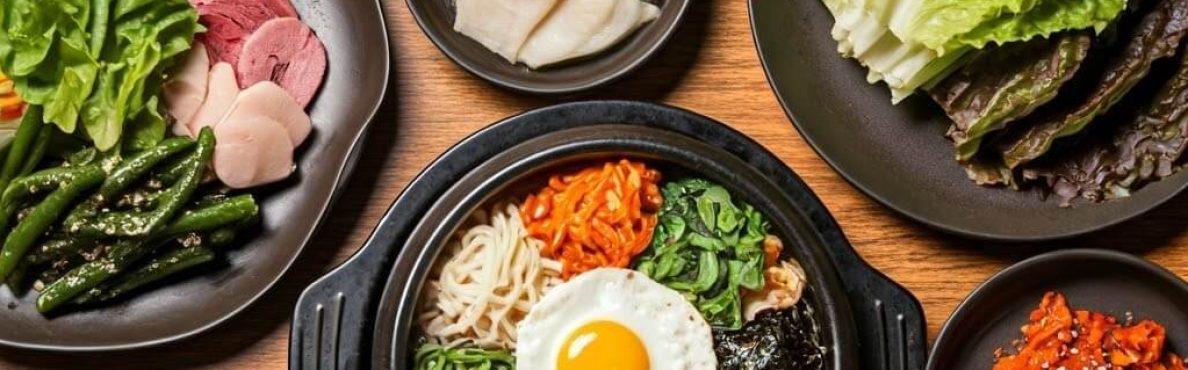
Feeling peckish in Seoul? So, let’s get out there and enjoy it!
A warm and welcoming guide to the amazing world of Korean street food
Ever thought about what it would be like to eat your way through Seoul? Picture less fancy tablecloths and more sizzling pans, bustling alleyways, and the magical aroma of something delicious frying just around the corner.
Korean street food isn’t just a snack; it’s an adventure – a crispy, spicy, sometimes-sweet adventure that will fill your belly and your Instagram feed. So, whether you’re planning your first trip or your fifth, grab your napkins and your curiosity. We’re heading into the delicious chaos of Seoul’s street food scene – where tradition rubs shoulders with Gen Z flair.
Old School vs. Gen Z: The Street Food Evolution
Korean street food has deep roots, and it’s something we should celebrate! Our lovely traditional favourites like tteokbokki and odeng were always there for us, a comforting treat that made us smile and sweat, all in one bite. The ajummas, those wonderful women who sold them from their humble carts, knew just how to make our hearts sing. But fast-forward to today, and you’ll find this culinary scene wearing glitter eyeliner.
Hey, let me introduce you to K-Street Food 2.0! It’s a fusion-inspired dish, perfect for sharing on social media. And it’s extra, in the best way! Hey, have you ever tried cheesy hotteok, fire noodles with mozzarella, or tacos with a bulgogi twist? They’re all super yummy and sure to satisfy your taste buds! These aren’t just snacks – they’re a way of making a statement.
But here’s the best part: Seoul’s streets are a lovely mix of the old and the new. One side offers comfort food that reminds you of childhood, like the warm, cosy feeling you got when you were little. The other? It’s food that’s practically begging to be TikTok’d! And you’re invited to taste both.
Must-Try Street Eats You’ll Still Dream About Later

Tteokbokki (Spicy Rice Cakes)
The undisputed queen of Korean street snacks. These chewy rice cakes swim in a luscious red pepper sauce that’s both sweet and spicy – a combo that makes your tongue tingle and your heart race.
It’s been a go-to snack for students and workers for decades, the kind of dish you eat hunched over a steaming tray with your mates, gossiping between bites.
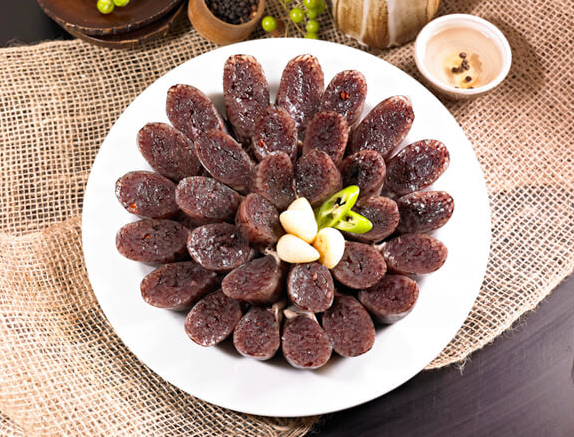
Sundae (Korean Blood Sausage)
Think of it as Korea’s answer to black pudding – but with glass noodles inside! Mild in flavour, hearty in feel, and always best with a sprinkle of salt or a dab of gochujang.
It’s the unsung hero that always shows up alongside tteokbokki and odeng, forming a trio no one dares break up.
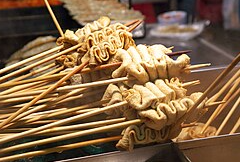
Odeng (Fishcake Skewers)
Hot skewers served with complimentary broth create a comforting winter experience.
One enjoys the warmth. People engage in conversation with the vendor amidst the bustling city.
Hotteok
This golden, pan-fried pancake hides a warm centre of melted brown sugar, cinnamon, and nuts.
Crispy on the outside, gooey inside – it’s like biting into a winter hug.
You haven’t truly survived a Korean winter until you’ve burned your mouth on a too-hot hotteok.

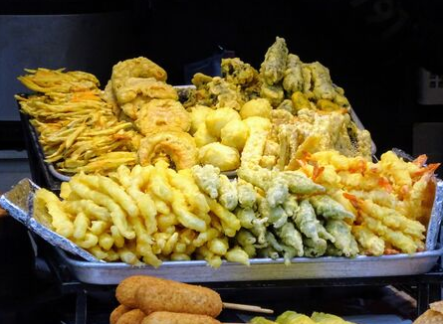
Twigim (Korean-style Tempura)
Twigim, a delectable Korean-style tempura that’s sure to tantalise your taste buds! Deep-fried anything.
Seaweed rolls, stuffed peppers, sweet potatoes. I totally get it, it always tastes better dipped in tteokbokki sauce!
Everything gets dunked in batter, fried till golden, and then (pro tip) dipped into your tteokbokki sauce. Because why not?
Bungeoppang (Fish-shaped Pastry)
A staple of childhood, these cute fishy-shaped pastries are filled with sweet red bean paste or creamy custard. They smell like nostalgia and taste like joy.
I totally get it, red bean is the classic choice for the filling, but hey, there’s so much more out there!
I absolutely love cream puffs and red beans, they’re my favorites!

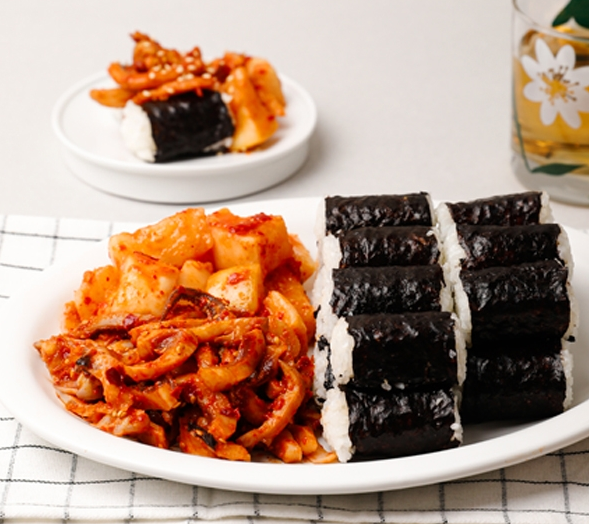
Chungmu Kimbap
A coastal classic turned street legend. These bite-sized seaweed rolls come with spicy squid salad and crunchy radish.
Clean flavours with a spicy, seafood twist – ideal for adventurous foodies.
Hot Dogs (Korean Style)
These aren’t your average dogs. Korea’s version is dipped in batter, deep-fried, coated in sugar (yes, sugar), and often stuffed with cheese or coated in potato cubes.
It’s sweet, salty, crunchy chaos on a stick – and it’s glorious.


Street Sandwiches
Imagine this – soft white bread, pan-fried egg, a thick slice of spam, mayo, ketchup, and crunchy cabbage. Sounds weird?
It works. Popular at bus stops and outside schools, this sandwich is a surprisingly filling pick-me-up.
Dakkochi (Chicken Skewers)
Marinated chicken chunks grilled over open flames and glazed with a sticky, spicy sauce. Each skewer is smoky, juicy, and guaranteed to disappear in seconds.

Where do you eat Korean street food?
When you eat street food in Seoul, it’s not just about filling your stomach. It’s a bit of an adventure, a bit of a fateful encounter, and I’m sure you’ll love it! I’m sure it’s the same delicious tteokbokki, but the mood and taste are different depending on where you eat it.
When I go to Seoul, I always try to visit the three traditional markets below whenever I have time.
🏮 Gwangjang Market(광장시장)
The queen of traditional street food, where you’ll find the warmest of welcomes!
You’ve just got to try the bindaetteok (crispy mung bean pancakes) if you’re in Seoul! They’re cooked on huge iron griddles and are absolutely delicious. Another must-try is the mayak gimbap – literally “narcotic” seaweed rolls! Yes, they’re that addictive!
You’ll be pleasantly surprised when you try a bite – you’ll understand why our lovely local residents keep coming back for more! Imagine you’re sitting on a tiny stool, right next to some of the most wonderful people you’ve ever met, and you’re enjoying a bowl of delicious makgeolli. It’s loud, it’s warm, it’s Seoul at its finest.
📍88 Changgyeonggung-ro, Jongno District, Seoul, South Korea
🍱 Tongin Market(통인시장)
A wonderful place where you can experience both history and hands-on fun.
It’s here, my friends, where food and play meet each other for the first time. Grab a tray, swap your cash for traditional brass coins, and go stall-hopping to build your own lunchbox. You simply have to try the delicious oil-fried tteokbokki, it’s a real local favourite! But don’t stop there, there’s so much more to try.
For example, you should definitely give the kimchi jeon, japchae and handmade croquettes a go. It’s a lovely, fun way to try out some of Seoul’s most delicious snacks, and you get to make your own creations too! It’s like a little museum, but with a picnic feel to it.
📍18 Jahamun-ro 15-gil, Jongno District, Seoul, South Korea
🛍️ Namdaemun & Myeongdong(남대문 시장 & 명동)
You’ll find a bustling, tourist-heavy area here, but it’s definitely worth the buzz!
Namdaemun is a maze of deliciousness, from sizzling skewers to mouth-watering fried mandu, and secret alleys filled with delightful surprises. Hey, why not treat yourself to some delicious spicy rice cakes or a classic Korean sandwich while you’re out browsing through all the amazing deals?
Just a few stops away, Myeongdong is a sensory overload of bright lights, beauty shops, and food stalls offering all kinds of delicious treats like cheese-pulled hot dogs, egg bread, and blow-torched lobster tails. It’s chaotic, but it’s also electric – like K-pop, but edible.
📍Namdaemun Market: 21 Namdaemunsijang 4-gil, Jung District, Seoul, South Korea
🍽️ Seoul’s Hidden Gems – The ‘Meokja Golmok’ Food Alleys
I just love a good Korean market, they always make me feel nostalgic. But my absolute favourite places are actually the food alleys(Meokja Golmok). There are so many amazing Meokja Golmok in Seoul (I don’t want to give away my favorites, but I’ll give you a quick intro just in case you’re not familiar with them!).
🥢 What Does ‘Meokja Golmok’ Mean?
‘Meokja’ (먹자) literally means “Let’s eat!” – it’s a casual, friendly command you’d say to a friend when you’re hungry or excited to share a meal.
‘Golmok’ (골목) means “alley” or “narrow street.”
Put them together and you get:
“Let’s Eat Alley” – or more naturally, “Food Alley” in English.
But really, it’s more than just a literal translation. A Meokja Golmok is a culinary destination tucked into the everyday streets of Korea, often lined with humble, locally-loved eateries specialising in one thing and doing it really well. We’re talking no-frills interiors, tables spilling into the street, the clatter of metal chopsticks, the buzz of soju-fuelled conversations—and of course, the irresistible smell of food in the air.
🐷 Jongno 3-ga Bossam Alley (종로3가 보쌈골목)
📍 How to get there, Address (for maps): 15 Jong-ro 18-gil, Jongno-gu, Seoul, South Korea
(종로3가 보쌈골목 주변 주소 기준), Exit 15, Jongno 3-ga Station
🥢 Must-try: Bossam set menu – steamed pork belly served with aged kimchi, radish wraps, raw garlic, and ssamjang. Around ₩12,000.
💡 Tip: Go early to beat the lunch rush—these seats fill up fast with office workers in-the-know.
This little alley is a hidden gem where the air is filled with the delicious scent of slow-simmered pork. Just picture those little eateries, all nestled together, each one serving bossam in their own special way.
The pork is so tender you’ll think it melts in your mouth, and the kimchi is fermented just right – tangy and spicy enough to cut through the richness. It’s so comforting, satisfying, and deeply, deliciously Korean.
And the best part? Some places even offer free doenjang jjigae on the side! Just what you need on a chilly Seoul afternoon.
🐟 Dongdaemun Grilled Fish Alley (동대문 생선구이골목)
📍 How to get there, Address (for maps): 289-3 Jongno 5(o).6(yuk)ga, Jongno-gu, Seoul, South Korea, Exit 6, Dongdaemun Station
🥢 Must-try: Charcoal-grilled mackerel with a set of rice, doenjang soup, and kimchi. Around ₩9,000.
💡 Tip: Sit near the grill to soak in the full sensory experience—yes, even the smoke.
When you step into this alley, it’s like time slows down and you’re surrounded by the warm, welcoming atmosphere of the local community. You’ll see beautiful charcoal braziers lined with golden fish, sizzling and crackling away under a steady hand.
The mackerel here is absolutely amazing – its skin is perfectly crisp, and the flesh is delightfully flaky and subtly smoky. Just the smell alone is enough to make you pause, and the first bite? Heaven. Served with simple but delicious side dishes, it’s a classic working-man’s meal that’s been loved for generations.
🐖 Gongdeok Jokbal Alley (공덕 족발골목)
📍 How to get there, Address (for maps): 15 Mallijae-ro 36-gil, Mapo-gu, Seoul, South Korea
(공덕 족발골목 위치 기준), Exit 5, Gongdeok Station
🥢 Must-try: Spicy jokbal (pig’s trotters) served with garlic leaves, raw oysters (seasonal), and a side of hot, rich blood soup. Sets range ₩25,000–35,000.
💡 Tip: Best enjoyed with a cold beer or soju—this is late-night soul food, Korean style.
When night falls, this little alley really comes alive! Neon signs flicker cheerfully, ahjussis roll up their sleeves, and steaming platters of glistening jokbal hit the tables.
And the texture? You are going to love this – it’s sticky, chewy and packed with collagen!
Whether you prefer a spicy kick or a classic soy-garlic flavour, every bite is filled with love, wrapped up in perilla leaves, garlic, ssamjang, and a whole lotta care.
And the soup? A peppery, iron-rich broth made with seonji (blood pudding)—it’s bold, deeply comforting and the ultimate hangover helper!
🥞 Hoegi Pajeon Alley (회기 파전골목)
📍 How to get there, Address (for maps): 6-4 Hoegi-ro, Dongdaemun-gu, Seoul, South Korea (회기 파전골목 주변 대표 가게 주소 기준), Exit 1, Hoegi Station
🥢 Must-try: Haemul pajeon (seafood pancake) paired with a chilled kettle of makgeolli. Around ₩20,000 for two.
💡 Tip: Come on a rainy day. There’s nothing more poetic than the sound of drizzle and the scent of sizzling scallion pancakes.
I absolutely love this alley, especially when it’s raining. It’s got such a great vibe! The locals swore by rainy days, saying they’re the perfect time for pajeon and makgeolli. And I have to say, they were right! They’re not wrong, and I totally get it.
I just know you’re going to love these pancakes! They’re extra crispy at the edges, and they’re generously packed with squid, shrimp and scallions. Just a little bit of soy sauce with a dash of vinegar and some chopped onions – what a treat!
And what about the makgeolli? It’s gently sweet, a touch fizzy, and served from tin kettles that just keep going, never running dry. It’s the perfect place to relax and unwind, whether you want to have a cosy chat or just let out a big laugh.
🧭 Tips for First-Time Street Foodies
- Follow the locals: If there’s a queue, it’s worth it.
- Bring cash: Not all stalls accept cards.
- Don’t be shy: Most vendors love it when foreigners try their food.
- Double dip? Nope. Use your own sauce bowl where provided.
Best Boozy Pairings for Street Eats🍻
- Tteokbokki + Makgeolli: The creaminess of the rice wine tones down the heat.
- Hotteok + Somaek (Soju + Beer): Dessert and drink in perfect harmony.
- Sundae + Soju: Classic. Comforting. K-style.
- Pajeon + Makgeolli: Especially on a rainy day – it’s practically tradition.
Convenience Store Soju Cocktails (Because Why Not?)
- Grapefruit Soju + Tonic Water + Ice – Fresh, fizzy, and dangerously drinkable.
- Chamisul + Pocari Sweat – Hydration + tipsiness? Iconic. (Also mildly irresponsible.)
If you’re still not sure what soju is, don’t worry! Why not check How to Drink Soju: A Beginner’s Guide to Korean Drinking Culture out right now and get drunk?
Seoul’s Street Food Is Calling. Will You Answer?
Whether you’re after a little bit of nostalgia, something new and exciting, or just a seriously satisfying snack, Seoul’s street food culture has you covered (and we’re talking skewers here, not skewer-shaped snacks!).
I can’t wait to see you! Come and join us for a delicious meal and a great time. We promise you’ll have a fantastic story to tell when you leave, and maybe even a few sauce stains to prove it!
Tag us @a_pinch_of_korea when you take your tastebuds on tour – and tell us which dish stole your heart!
 A Pinch of Korea