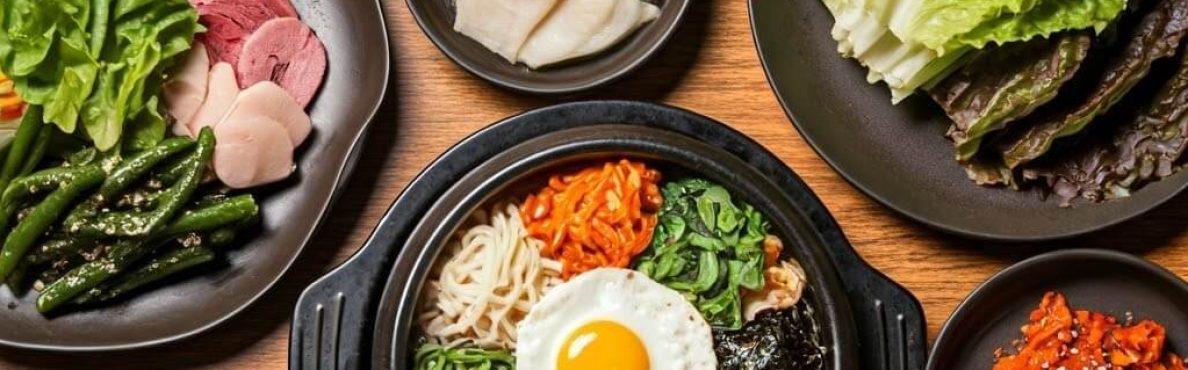
When the Season Flavours Your Food: Korean Seasonal Eating
Okay, quick question—are you one of those people who posts the same avocado toast pic whether it’s minus 5 or sweltering hot outside? Raises hand guilty as charged. Well, turns out Koreans have been quietly judging us for centuries while practicing something that fancy food magazines are only just catching on to—eating what’s actually in season!
In Korea, this isn’t some posh Gwyneth Paltrow-approved trend; it’s literally baked into their cultural DNA. There’s this gorgeous phrase “shintoburi” (신토불이) which basically means “body and soil are one”—poetic way of saying “eat what grows naturally and your body will thank you.” It’s like Mother Nature’s personalized meal plan, except she doesn’t charge you £49.99 a month or send passive-aggressive reminders.
Traditional korean food Spring: Nature’s Apology for Winter
After months of surviving on kimchi and stews that could outlast nuclear winter, spring in Korea arrives like that friend who disappears for months then shows up with concert tickets and wine. It’s forgiveness in the form of tender greens and fresh herbs.
Traditionally, this is when Koreans would grab their baskets and go full-on foraging mode, searching for wild greens that supposedly cleanse winter’s comfort food from your system. (Whether that’s scientifically proven or just a great excuse to wander through pretty meadows, I’ll leave to you!)
So grab your wellies and let’s go on a metaphorical foraging adventure through Korean spring! (Don’t worry—no actual hiking required, just an open mind and maybe an Asian grocery store nearby.)
1. Dureup (두릅) – Korean Mountain Vegetable
If asparagus went to art school and had an existential crisis, you’d get dureup. These wild mountain vegetables look like tiny alien Christmas trees with spiky green fireworks frozen at the top. Taste-wise? Imagine asparagus and artichoke had a woodland baby with attitude.
What makes dureup special is that it’s proper “sanchae” (mountain vegetable)—the kind people actually climb mountains to find when the snow melts. You can’t just pop to Tesco for these bad boys.
True story: My friend’s dad (who moved from Seoul to Croydon in the ’80s) used to drag the whole family on a three-hour drive to Wales every April. He’d scramble up hills with a little basket like some Korean Bear Grylls, convinced he could find dureup lookalikes among British weeds.
His kids would die of embarrassment while he foraged with the determination of a man who’d happily risk public humiliation for a taste of home. More often than not, they’d end up stopping at a Chinese supermarket in Birmingham on the drive back. Close enough, right?
How it’s traditionally eaten: Koreans usually blanch dureup quickly (bye-bye bitterness), then season it with doenjang (fermented soybean paste that smells questionable but tastes divine), sesame oil, and garlic. They also fry it in batter as “dureup twigim” because let’s be honest, anything tastes good fried.

✨Simple original recipe: Dureup Muchim (Seasoned Mountain Vegetable)
- 200g dureup
- 1 tablespoon doenjang (Korean soybean paste)
- 1 teaspoon minced garlic
- 1 teaspoon sesame oil
- 1 teaspoon toasted sesame seeds
- 1 teaspoon soy sauce
Blanch dureup for 30 seconds, then shock in ice water like you’re performing vegetable CPR. Mix with everything else and let it sit for 10 minutes while the flavors get to know each other.
✨UK adaptation: Wild Garlic & Asparagus Muchim
- 150g asparagus, woody ends removed (because life’s too short)
- 50g wild garlic leaves (yes, you can forage these in British woodlands without looking crazy)
- 1 tablespoon miso paste (Sainsbury’s world food aisle, next to the sushi that nobody ever buys)
- 1 teaspoon minced garlic (because there’s no such thing as too much garlic)
- 1 teaspoon olive oil
- 1 teaspoon toasted sesame seeds
- 1 teaspoon soy sauce
Blanch asparagus for 2 minutes, throw in wild garlic for the last 5 seconds, then ice bath. Mix with the rest and pretend you’re a Korean food influencer as you arrange it artfully on a plate.
2. Ssuk (쑥) – Korean Mugwort
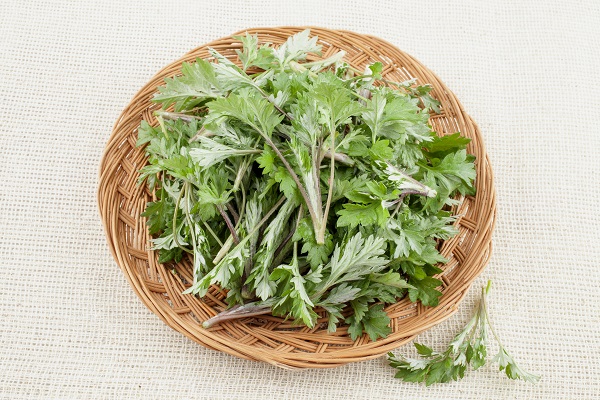
Every spring, Korean markets fill with the smell of ssuk (mugwort)—imagine a herb that smells like sage had a baby with that mystical shop in Camden Market where they sell crystals and questionable incense. The feathery, silvery-green leaves look like they belong in a fairy garden.
Funny enough, British gardeners might recognize mugwort as “that bloody weed that’s taking over my flower bed,” while Koreans treasure it like it’s green gold. They believe it detoxifies your body after winter (which, after months of Christmas pudding and roasts, we could all use).
Personal confession: When I was little, I wanted to surprise my mum by harvesting “ssuk” from our garden. I proudly presented her with an armful of… random weeds. The look on her face—trying to balance “that’s nice, dear” with “please don’t poison us”—was priceless. Since then, I’ve strictly followed the “buy, don’t forage” philosophy. Some lessons are learned the hard way.
How it’s traditionally eaten: The star of the show is definitely “ssuk-tteok” (mugwort rice cakes)—chewy, slightly herbal rice cakes that turn a beautiful jade green when mugwort’s added. They also use it in soups, pancakes, and teas.
✨Simple original recipe: Ssuk-tteok (Mugwort Rice Cakes)
- 200g glutinous rice flour
- 60g fresh mugwort, blanched and finely chopped
- Pinch of salt
- 3-4 tablespoons hot water
- Honey for serving
Mix everything into a dough that feels like Play-Doh for grown-ups. Shape into little balls or ovals, steam for 10 minutes until they’re translucent enough to recognize your childhood dreams through them, then drizzle with honey.
✨UK adaptation: British Mugwort & Barley Scones
- 200g plain flour
- 50g barley flour (Holland & Barrett, where you pretend you’re going to start that health kick)
- 2 tablespoons dried mugwort (health food shops or careful foraging)
- 2 teaspoons baking powder
- 50g cold butter
- 1 egg
- 100ml milk
- Pinch of salt
- Honey or clotted cream for serving
Make like you’re doing normal scones but add mugwort. Bake at 200°C for 12-15 minutes until golden. Serve warm with honey for a Korean-British fusion that would confuse both your nan and a Korean grandmother equally—cultural harmony achieved!
3. Dallae (달래) – Korean Wild Chives
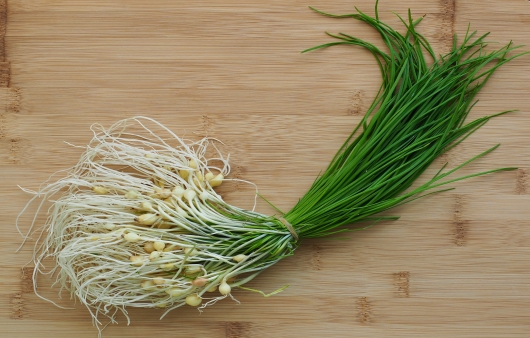
If spring had a cheerleader in Korean cuisine, it would be dallae. These delicate wild chives are like the quiet person at the party who suddenly says something brilliant and makes everyone stop and listen. They pack SUCH a flavor punch!
Dallae is milder than garlic but bolder than regular chives, with a slightly sweet finish that screams “WINTER IS OVER, PEOPLE!” with every bite. They’re among the first green things to poke through the soil after winter, nature’s way of saying “sorry about those three months of darkness and seasonal depression.”
To be honest, I haven’t met Dallae in England yet, so I’m a little lost for words.
How it’s traditionally eaten: Often made into kimchi (dallae-kimchi) or mixed with doenjang to create a spread that would make Marmite seem subtle. Also fantastic in seafood pancakes or chopped into soups.
✨Simple original recipe: Dallae-muchim (Wild Chive Salad)
- 200g dallae, washed and cut into 5cm lengths
- 2 tablespoons gochugaru (Korean chilli flakes)
- 1 tablespoon fish sauce
- 1 tablespoon minced garlic
- 1 teaspoon sugar
- 1 tablespoon toasted sesame seeds
- 1 tablespoon sesame oil
Chuck it all together and let it sit for at least 30 minutes. This punchy side dish will make even the blandest supermarket chicken taste interesting.
✨UK adaptation: British Spring Allium Salad
- 100g young spring onions with bulbs attached
- 100g wild garlic leaves, roughly chopped
- 2 tablespoons chilli flakes
- 1 tablespoon Worcestershire sauce (because what’s more British?)
- 1 tablespoon minced garlic
- 1 teaspoon honey
- 1 tablespoon toasted pine nuts
- 1 tablespoon olive oil
Trim spring onions but keep those cute little bulbs. Mix everything together and let it marinate while you contemplate why British people don’t use more herbs in cooking. Serve with your Sunday roast and watch people’s minds be blown.
4. Jukyeojang (죽순장) – Bamboo Shoot Dish
When you think bamboo shoots, you probably think of those sad, waterlogged things in your Chinese takeaway. But fresh spring bamboo shoots in Korea cause genuine excitement—people actually get giddy over them! Unlike the canned stuff lurking next to the water chestnuts at Tesco, fresh bamboo shoots have a crisp texture and subtle flavor that’s worth the faff of preparing them.
And oh my days, the FAFF. Young bamboo shoots need boiling multiple times to remove bitterness—the kind of labor-intensive cooking that makes you appreciate why convenience food exists. But once properly prepared, they reward you with a unique texture that’s both tender and crunchy.
I once watched a Korean cooking show where the host woke up at stupid o’clock to harvest bamboo shoots from a mountain, then spent the entire morning preparing them—boiling, peeling, slicing—only to create a dish that would be demolished in approximately 2.5 minutes. My British flatmate, watching with me, was utterly perplexed: “All that for a vegetable side dish? Why not just open a tin?” I couldn’t explain that sometimes the effort IS the point. Some cultural divides can never be bridged, especially when one culture invented the ready meal and the other has a 200-step kimchi recipe.
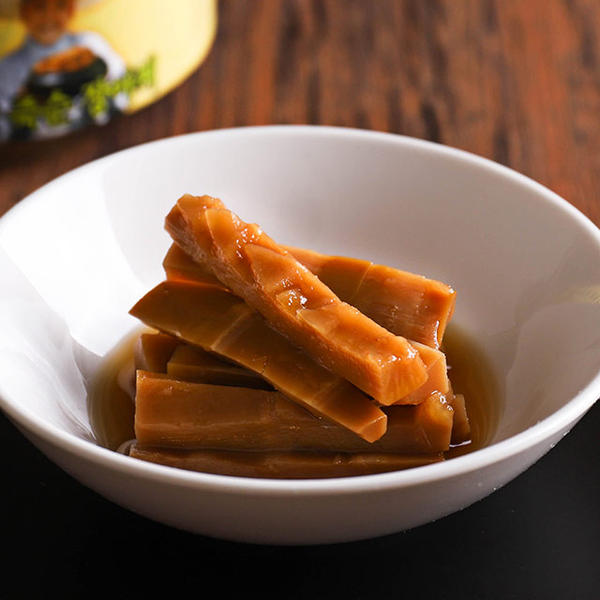
How it’s traditionally eaten: Often braised in soy sauce to create “jukyeojang,” a banchan (side dish) that keeps for days. Also wonderful in spring bibimbap or stir-fried with other vegetables.
✨Simple original recipe: Jukyeojang (Soy-Braised Bamboo Shoots)
- 500g fresh bamboo shoots, pre-boiled and sliced
- 3 tablespoons soy sauce
- 1 tablespoon sugar
- 2 tablespoons minced green onion
- 1 tablespoon minced garlic
- 1 tablespoon sesame oil
- 1 tablespoon toasted sesame seeds
- 1 dried red chilli, sliced
Throw everything except sesame seeds in a pot. Boil, then simmer for 20 minutes until the liquid mostly disappears. Sprinkle with sesame seeds and pretend you spent all morning foraging for the shoots yourself.
✨UK adaptation: British-Asian Braised Asparagus
- 400g British asparagus (spring’s MVP)
- 2 tablespoons soy sauce
- 1 tablespoon Demerara sugar
- 2 tablespoons chopped chives
- 1 tablespoon minced garlic
- 1 tablespoon olive oil
- 1 tablespoon toasted hazelnuts, chopped
- 1 red chilli, sliced
Blanch asparagus for 2 minutes, shock in ice water (again with the veggie CPR), then simmer gently in the sauce for 5 minutes until glazed. Sprinkle with hazelnuts and serve to people who thought asparagus only came with hollandaise.
5. Hwajeon (화전) – Flower Pancakes
Ready for the ultimate spring Instagram thirst trap? Hwajeon are gorgeous rice flour pancakes embedded with ACTUAL EDIBLE FLOWERS. They’re what would happen if botanists started a pancake shop.
The name literally means “flower cake,” and eating them feels like consuming spring itself—slightly pretentious to say, but absolutely true. They’re traditionally enjoyed during Samjitnal spring festival (third day of the third lunar month), when Koreans celebrate flowers blossoming and nature awakening.
When I first came to England, I made hwajeon for an international food festival. While casually picking edible flowers in the Botanic Garden (from public paths ONLY—I’m not a criminal!), a groundskeeper approached with that “I’ve caught you red-handed” look. When I explained I was collecting ingredients for traditional Korean flower pancakes, his suspicion transformed into fascination. He ended up giving me an impromptu tour of edible blooms AND came to the festival to try them! Sometimes food creates the most unexpected friendships. Although to be fair, I think he fancied me.
How it’s traditionally eaten: Served as dessert or with afternoon tea, often with honey or fruit preserves for dipping. Best enjoyed fresh, when the rice flour base is still pleasantly chewy.
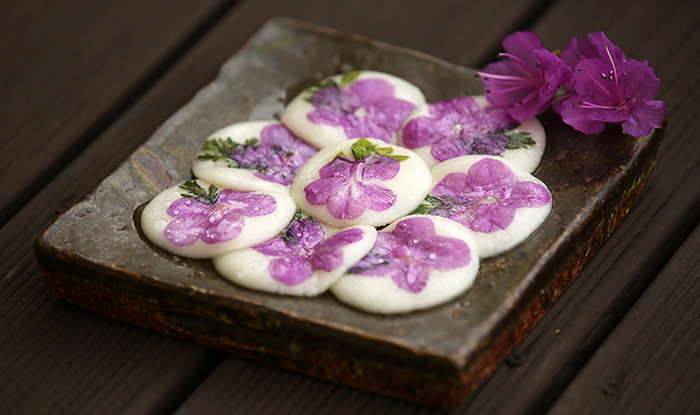
✨Simple original recipe: Cherry Blossom Hwajeon
- 200g sweet rice flour (glutinous rice flour)
- 180ml warm water
- 2 tablespoons sugar
- Pinch of salt
- 20-30 edible cherry blossoms or azalea flowers, washed and dried
- Honey for serving
- Vegetable oil for frying
Mix everything except flowers into a batter. Pour small circles in a lightly oiled pan, press flowers into the wet surface (gently, like you’re tucking them into bed), flip when edges firm up, and cook another minute. Serve warm with honey and watch people be too impressed to actually eat them.
✨UK adaptation: British Springtime Flower Crumpets
- 200g plain flour
- 1 teaspoon active dry yeast
- 1 teaspoon sugar
- 1/2 teaspoon salt
- 300ml warm milk
- 1/2 teaspoon bicarbonate of soda dissolved in 1 tablespoon water
- Edible British spring flowers (violets, primroses, or pansies)
- British heather honey for serving
- Butter for cooking
Make a crumpet batter (or buy ready-made, I won’t tell), cook until bubbles appear, then gently press flowers on top. No flipping needed! Serve warm with honey and feel smugly artisanal.
Spring Celebrations: Samjinnal Festival Foods
Samjinnal Festival (삼짇날), happening on the third day of the third lunar month (usually April-ish), marks when swallows return from their winter Airbnbs down south. It’s basically Korea’s way of making spring official.
Besides the flower pancakes, people traditionally drink azalea wine (두견주 – dugyeonju) and eat seasonal herbs wrapped in freshly picked lettuce leaves. Think of it as nature’s spring tasting menu.
If you want to celebrate in the UK without looking completely bonkers, substitute local edible flowers like violets or primroses. Your neighbors might still think you’re odd for pressing flowers into pancakes, but at least you’ll be seasonally appropriate.
Embracing Korean Spring on British Soil
Let’s be real—you’re probably not foraging for dureup in the Lake District or harvesting bamboo shoots in your back garden anytime soon. But the heart of Korean spring cuisine—celebrating those first green shoots after winter—translates perfectly to British food culture. After all, both countries get properly excited about asparagus season!
By combining British spring heroes like wild garlic, early asparagus, and woodland herbs with Korean cooking techniques, you’re basically creating an edible peace treaty between cultures. The Korean philosophy of shintoburi (body and soil are one) works whether you’re in the mountains of Jeju or the rolling hills of the Cotswolds.
So as daffodils pop up and lambs do their bouncy thing across Britain, consider bringing a taste of Korean spring to your table. Your body will thank you for the seasonal harmony, and your Instagram followers will think you’ve suddenly become cultured. Win-win!
Have you tried Korean spring foods? Or created your own British-Korean fusion dish? I’d love to hear about your adventures in the comments below, especially any foraging disasters—they make me feel better about my childhood weed-harvesting incident!
This guide is part of our seasonal Korean food calendar series. Check back for our Summer, Autumn, and Winter editions in the coming months. Or don’t—I’m not your mum.
I’ll still be eating Gimbap and dumplings and thinking about the next recipe. See you soon!
 A Pinch of Korea