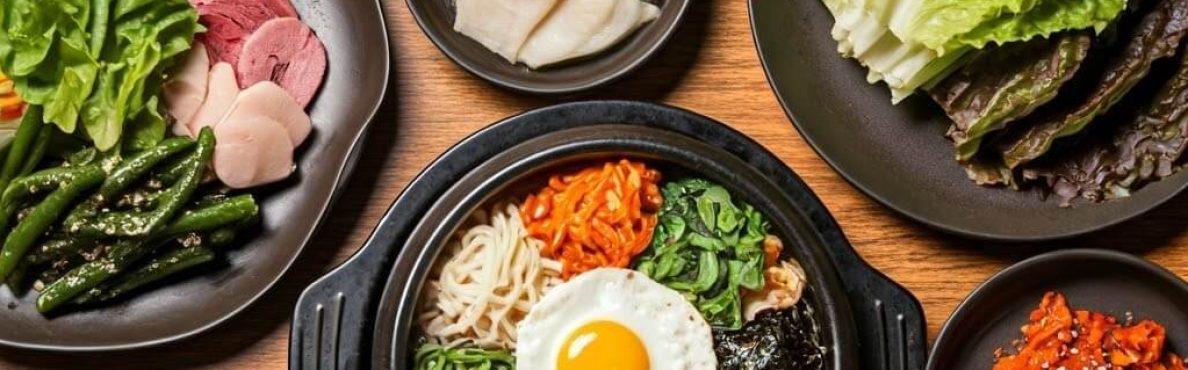
“Korean Food Near Me?” Nah, It’s Already in Your Soul: 10 Must-Try Korean Dishes Recommended by Real Koreans in the UK
If you’ve ever found yourself searching “Korean food near me” on Google and felt a hopeful sigh and a full stomach, I totally get it. I totally understand, I’ve been there too! So, whether you’re a K-drama buff or a foreigner missing the taste of home, there’s a certain pain that only Korean food can solve.
But when you actually go into a Korean restaurant, you probably don’t know what to order, which is totally understandable! In this no-nonsense (but totally heartwarming) guide, I’ll take you through 10 proper Korean dishes — the ones real Koreans actually order, not just what’s Instagrammable.
We’re talking the kind of meals that make you sweat a little, smile a lot, and maybe even shout “ma-sit-da!” after a few sips of soju. Every dish comes with a backstory (because food without history is just calories), eating tips that’ll save you from rookie mistakes, and the ultimate Korean booze pairing because, let’s be real, we love a good drink with our food.
Whether you’re a K-pop fan dabbling in kimchi or a seasoned Korean food lover looking to go deeper, this list is your spicy, savoury, soul-warming cheat sheet. No fluff. No filters. Just proper food recs from a Seoul-born stomach.
A Pinch of Korea
1. Jeyuk Bokkeum (Spicy Pork Stir-Fry)
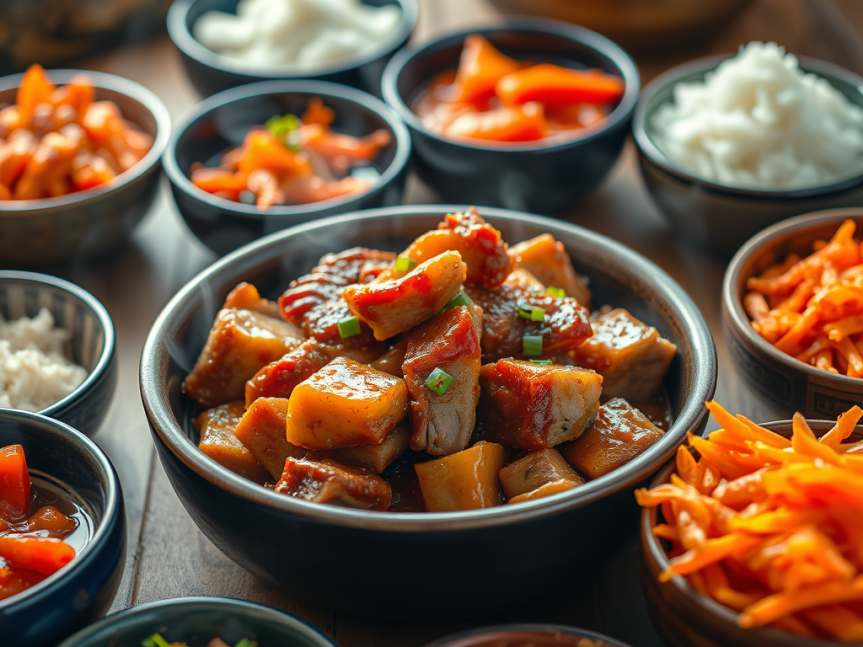
When life slaps you in the face, Koreans slap back with a plate of jeyuk bokkeum. Spicy, garlicky, slightly sweet — this pork stir-fry isn’t just a meal; it’s emotional support on a plate. The kind of food you crave when it’s raining outside and your boss just sent ‘one more thing’ at 5:55 PM.
Originally rising to popularity in the post-war industrial era, jeyuk bokkeum was Korea’s way of turning humble pork into a powerful pick-me-up. Gochujang (Korean red pepper paste), soy sauce, garlic, sugar, and a bit of ginger come together to form a thick, fiery glaze that clings to every bite of pork like it means business.

💡A Pinch of korea tip
Wrap it in lettuce with garlic and ssamjang (fermented bean paste). The crunch-soft-spicy combo is magical. No lettuce? Use tortilla wraps for a Korean-Mexican twist. Trust me.
You can often find it on menus in London’s Centre Point Korean spots like any Korean restaurant. Look for “spicy grilled pork” or “gochujang pork stir-fry” if it’s hiding under an English alias.
And yes — this is the dish that demands soju. Cold, clean, and cutting through the heat like an ex you’re actually happy to see.
2. Kimchi Bokkeumbap (Kimchi Fried Rice)
Leftover rice. Overripe kimchi.(Oh, absolutely! You can totally make and eat kimbap!) An egg. That’s it — I remember making kimchi with leftovers from my college days, but now you can find it as an attachment at any restaurant, which is great!
Kimchi bokkeumbap isn’t just Korean comfort food; it’s the edible equivalent of your mum pulling you in for a hug and saying, “You’ll be alright.” First born out of frugality (no waste allowed in Korean kitchens!), it became a classic dish in its own right.
You fry chopped kimchi with a bit of butter or sesame oil, toss in day-old rice, and stir until it’s smoky and slightly caramelised. Top it off with a sunny-side-up egg — the runny yolk becomes a sauce of its own.

Top it with
- Seaweed flakes
- A tiny drizzle of soy sauce
- A dollop of mayo or cheese (yes, mayo — don’t knock it till you’ve tried it)
Most Korean restaurants in the UK offer it, but you’ll know you’re in the right place if the menu warns, “spicy.” It should make your lips tingle — otherwise, send it back!
🍶Pair it with: Makgeolli or cold beer. It’s basically the Netflix-and-chill of Korean cuisine.
3. Bulgogi (Marinated BBQ Beef)
Bulgogi is the dish you bring someone home to meet your parents with. Elegant, classic, and slightly sweet, it’s the gateway Korean BBQ dish that everyone loves.
Literally meaning “fire meat,” bulgogi dates back to the Goguryeo era (that’s 37 BC, by the way) and was once a delicacy for Korean nobility. Now, it’s just what we eat on a chill Friday night when we want to feel fancy without breaking out the ironed shirt.
The beef is marinated in soy sauce, sugar, garlic, and Asian pear (yes — that’s the secret weapon) for tenderness and depth. Grilled until slightly charred but still juicy, it goes perfectly with rice and grilled garlic.

💡A Pinch of korea tip
Mix a bit of the bulgogi juice with your rice. It’s low-key illegal in Korea not to.
You’ll find solid versions of this in bigger Korean restaurants like Olle in London. Or DIY it with pre-marinated bulgogi from Korean supermarkets like H Mart.
🍶Pair it with: Soju, beer, or a fizzy cider. Bulgogi doesn’t judge.
4. Soondubu Jjigae (Spicy Soft Tofu Stew)
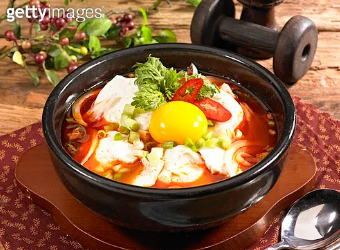
This dish is hot. As in spicy, steamy, and slightly dangerous. Soondubu jjigae is a bubbling red stew filled with silken tofu, clams or beef, and that signature Korean soul-warming magic.
Popularised in the 1990s through specialist tofu restaurants, it became a millennial comfort classic. Now, it’s what Koreans crave after walking through London rain or when their soul needs exfoliating.
What makes it special? The texture. The tofu is soft like custard but sits in a broth that kicks like a dram of whisky. Cracking a raw egg in at the end is the finishing move.
Eat it with
- Steamed rice (mandatory!)
- Kimchi (for extra funk)
- A warm hoodie and an existential crisis
Find it at places like Dotori (Finsbury Park) or BiBimBap Soho. If it doesn’t come to the table bubbling like volcanic lava, send it back and demand a refund in kimchi.
5. Samgyeopsal (Grilled Pork Belly BBQ)
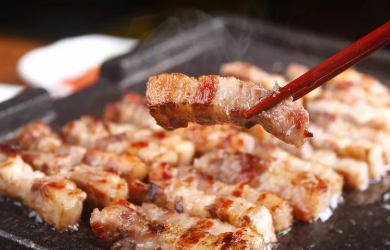
If Korean cuisine had a Tinder profile, samgyeopsal would be the charming rogue with the perfect jawline. Thick slabs of pork belly, grilled tableside, dipped in sesame oil with salt — this is not a drill.
Samgyeopsal is less about the meat and more about the ritual. You grill it yourself (yes, YOU), flipping it until it’s just crispy on the edges but still juicy. Then wrap it in lettuce with a slice of garlic, ssamjang, and maybe a sliver of green chilli if you’re feeling dangerous.
History nugget: Post-Korean War, meat became more accessible, and grilling samgyeopsal at home symbolised post-industrial prosperity. That’s right — this dish is literally grilled resilience.
💡A Pinch of korea tip
Don’t wear your best jumper. The BBQ smell will haunt it forever.
Best enjoyed in bustling Korean BBQ joints like Chungdam or Arang. Or buy a portable grill and do it at home — just warn the neighbours.
🍶Pair it with: Soju/Mak. No further explanation needed.
6. Korean Fried Chicken (Yangnyeom or Original)
Right, let’s get this out of the way — Korean fried chicken is not your average takeaway bird. It’s not the soggy box you get after a night out. It’s not a dry Sunday roast. This is something else. This is… art. With garlic.
So what makes it so special? Well, imagine double-fried wings so crispy they shatter when you bite into them — like tempura’s crunchier, cooler cousin. Then drench them (or lightly toss, if you’re classy) in a sauce that hits every corner of your tastebuds: sweet, spicy, sticky, tangy. Think Gochujang-based sauces with honey, soy garlic glazes, or fire-level spicy coatings that make your nose run in the best way possible.
A little backstory
Korean fried chicken (or yangnyeom chicken, if we’re being technical) really took off after the 1997 Asian financial crisis. Fried chicken joints popped up everywhere as small, affordable businesses — and Koreans just kept innovating the heck out of it. Today, there’s honey butter chicken, cheese snow chicken, curry-flavoured chicken… It’s a proper universe.
And yes, K-pop helped too. Ever seen a BTS member bite into saucy chicken mid-variety show? That’s diplomacy.

💡A Pinch of korea tip: How to eat it like a Korean
Don’t fight the sticky fingers. It’s part of the experience. Always with pickled radish (chikin-mu). The sharp tang balances the grease and keeps your palate refreshed.
Wash it down with cold beer (maekju) or soju. This is where the famous term “chimaek” comes from — chikin + maekju. Trust me😉
7. Japchae (Glass Noodles Stir-Fry)
Let me tell you something — no Korean ever “just” makes japchae. This dish takes effort, coordination, and enough chopping to make you question your life choices. Which is exactly why it tastes so good.
Japchae isn’t fast food. It’s ceremonial food. It’s what shows up at birthdays, weddings, family reunions, and occasionally on a random Tuesday when your mum suddenly misses you.
What’s in it, then?
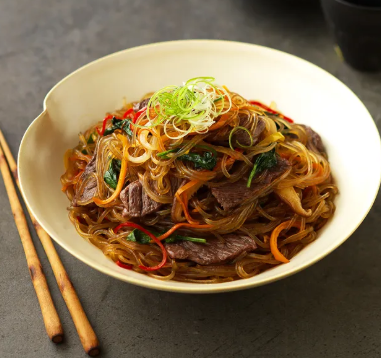
The heart of japchae is dangmyeon — chewy glass noodles made from sweet potato starch. They’re glossy, bouncy, and so slurpable you’ll need a moment of silence after your first bite.
Stir-fried with soy sauce, sesame oil, sugar, and garlic, these noodles are tossed with a rainbow of thinly sliced veg — think spinach, carrots, onions, mushrooms, and occasionally beef or egg. It’s colourful, aromatic, and lowkey addictive.
Little-known history nugget
Originally a royal dish from the 17th century Joseon dynasty, japchae didn’t even have noodles in it. It was mostly veg and mushrooms. Noodles joined the party centuries later, and honestly, we all levelled up when they did.
💡A Pinch of korea tip
Always mix it before eating. That shine isn’t just for Instagram. It needs a good toss to get the flavour flowing.
Eat it warm, room temp, or even cold from the fridge at 2am. There’s no wrong way.
Add rice if you’re hungry. Yes, carbs on carbs — welcome to Korea.
Pairs surprisingly well with makgeolli (if you like creamy rice wine) or even a dry white wine if you’re feeling fancy-British about it.
8. Tteokbokki (Spicy Rice Cakes)
Tteokbokki is the bad boy of Korean food — messy, spicy, and irresistibly fun. Imagine plump rice cakes bathed in a glossy red gochujang-based sauce that’s sweet, spicy, and just the right amount of chaotic.
It started life as a royal soy-sauce braised dish (yes, really — it was once posh). But the spicy version we love today popped up in post-war Seoul street markets in the 1950s and never left. Thank goodness.

💡A Pinch of korea tip
You really can’t go wrong with fish cakes (eomuk) mixed in, as they soak up the sauce like a sponge. And don’t even think about skipping the boiled egg – that’s a must! I know you’ll be so grateful to me for this!
If you want to unleash your inner K-drama character, why not chase it with a glass of soju or beer? Feeling a little extra today? Go ahead and add the ramyeon noodles right in – it’s called “rabokki” and it’s absolutely delicious!
It’s messy, sure, but that’s all part of the fun! Your fingers might get a bit red, and your nose might start to sweat a bit. But your heart? So full.
9. Haemul Pajeon (Seafood & Spring Onion Pancake)
You haven’t truly lived until you’ve heard the sound of rain while flipping a seafood pancake on a sizzling pan. That’s the Korean pajeon experience.
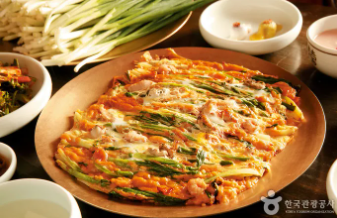
It’s crispy on the outside, soft in the middle, packed with spring onions (pa) and loaded with prawns, squid, and the occasional mussel. Think frittata meets fritter.
It’s got ancient roots — back in the day, farmers made jeon-style dishes with scraps after harvests. Fast forward, and now it’s makgeolli’s best mate.
💡A Pinch of korea tip
And don’t forget to dip it in vinegary soy sauce for the perfect flavour! I totally get it, it’s like chips without vinegar! You really can’t beat eating pajeon fresh from the pan – it just doesn’t taste as good when you try to reheat it!
Hey, why not try pairing it with makgeolli on a rainy day? It’s a great way to show off your cultural side and have a fun time with friends!
Bonus: In Korea, we have this lovely little saying that rain makes us crave pajeon because it sounds like it. Science? No. Vibes? Oh, absolutely!
10. Donkkaseu (Korean Pork Cutlet)
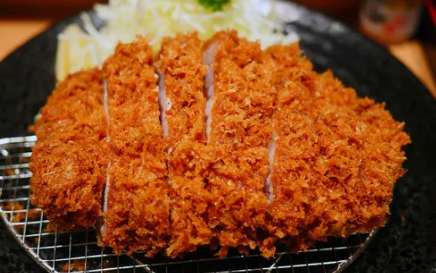
Donkkaseu (a.k.a Korean-style pork cutlet) is what happens when Japan’s tonkatsu goes to Korea and gets lovingly rebranded. It’s bigger, crispier, saucier, and somehow also served with corn and spaghetti. Yes, that spaghetti.
It exploded in popularity in the 70s–80s as a Western-inspired dish at school canteens and “family restaurants”. Today, it’s comfort food for grown-up kids who still want that nostalgic crunch.
💡A Pinch of korea tip
And don’t forget to use a knife and fork! I know that chopstick warriors out there will find this a bit of a challenge, but I’m sure you’ll all get there in the end! Scoop up that delicious gravy-style sauce with every bite – it’s the heart and soul of the dish!
And if you can find a way to mix it with rice and leftover salad dressing, that would be the icing on the cake! I really love this with a light beer, or even cider if that’s more your thing. They go so well together!
📍 Still wondering “Korean food near me”?
The answer: Yes. You. Now.
So, here you go – 10 dishes that are even better than your average “Korean BBQ near me” Google search!
You know when you try something new and it’s just wow… that’s what it’s like with tteokbokki, the way kimchi fried rice cheers you up when you’ve had a few too many, or the way japchae makes you feel all warm and fuzzy inside. Each dish is more than just something to eat, it’s a little bit of comfort food that just makes you happy. It’s a little slice of Korea, full of nostalgia, humour and warmth, perfect for anyone who’s ever thought, “I want to try that.”
These aren’t just menu items, they’re a way of life! They’re the dishes that Koreans crave when they’re feeling homesick, and the flavours we love to share with friends to show them just how much we care.
And the best part? You don’t have to book a flight to Seoul or decode Hangul on a neon-lit side street. You’ve got Korean food right here, in your city, your high street, even your Deliveroo app.
Hey, you’re just around the corner from some delicious Korean food! Hey, I totally get it, but it might already be on your plate!
Ready to dig in? Let me know your go-to Korean dish in the comments — or message me for a proper mukbang session in London. Cheers, or as we say in Korea: 건배 (geonbae)!
Frequently Asked Questions: Korean Food Near Me🤔
1. What’s the best Korean dish for beginners?
Bulgogi (불고기) is a classic starting point. This sweet and savoury marinated beef dish is easy to love — no spice, no surprises, just delicious umami-rich comfort. Try wrapping it in lettuce with rice and ssamjang (spicy paste) for the full Korean BBQ experience.
Want to level up? Check out our spicy pork (jeyuk bokkeum) recommendation in the full guide above!
2. Is all Korean food spicy?
Not at all. While dishes like tteokbokki, kimchi jjigae, and soondubu bring the heat, there are plenty of mild options like japchae, bulgogi, and donkatsu. Korean cuisine is about balance, not just burn.
Bonus tip: Most Korean places in the UK will adjust the spice level if you ask. Just say “mild, please” – or wink and say “British level.”
3. What Korean food pairs well with alcohol?
Korean food and booze go together like tea and biscuits.
- Soju + spicy pork = heat and sweet harmony
- Beer + Korean fried chicken = crunch heaven
- Makgeolli + haemul pajeon (seafood pancake) = a rainy day tradition in Korea
See our drinking tip section for more cheeky combos!
4. Where can I find authentic Korean food in the UK?
You’ll find great spots in London (New Malden, Soho), Manchester, Birmingham, and even university towns. Skip the flashy fusion joints and go for those with Korean signage and busy tables full of ajummas. If the kimchi tastes homemade — you’re in the right place.
Not sure what to order? Our top 10 Korean dishes are loved by actual Koreans — check them out above.
5. Why are there so many small dishes (banchan) in Korean cuisine?
Banchan (반찬) are Korean side dishes served with every meal — not as extras, but as essentials. From kimchi to stir-fried beansprouts, they’re all about variety, balance, and community eating. It’s like tapas… but with more garlic.


 A Pinch of Korea