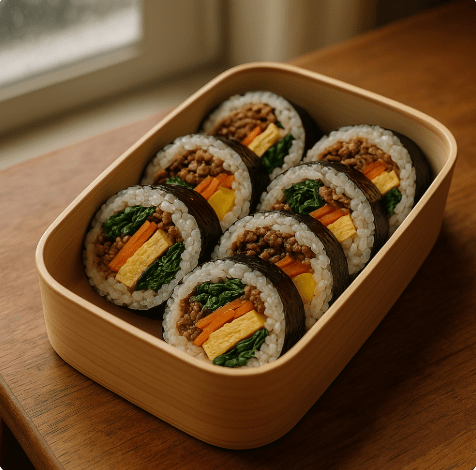
Gimbap (also spelled kimbap) is often referred to as the Korean sandwich — compact, flavorful, and incredibly satisfying. I really struggled to decide on my first dish, but in the end I went for Gimbap(Kimbap).
It’s a simple meal, but it’s so much more than that! It’s like a Korean sandwich, but it’s got its own unique flavour. gimbap is a dish with a story, flavour, and rooted in tradition.
I remember growing up, we used to have gimbap at picnics, lunches, and family gatherings, so it feels like the perfect way to kick off my journey on A Pinch of Korea.
I still love it today, and I hope you will too! It’s such a simple rice dish, but it’s absolutely delicious. It’s made with healthy vegetables, bulgogi or ham, and savoury rice wrapped in glossy gim(Seaweed paper or nori). Imagine it as a culinary hug — compact, portable, and utterly satisfying.
🥢 Let’s Make Gimbap – The Accessible Way
Look, I’ve been there – standing in my kitchen at 11 PM with a serious kimbap craving but no Korean grocery store in sight. No worries! Let’s MacGyver this with whatever’s in your fridge right now.

Stuff You’ll Need (makes about 4 rolls… or 2 if you’re me)
- 4 sheets of roasted seaweed (Koreans call it “gim” but you’ll probably find it labeled as “nori” in the store – usually hiding in that “international” aisle nobody visits)
- 2 cups cooked short/medium grain rice (sushi rice works great, but honestly? Whatever rice you’ve got will do in a pinch. Don’t tell my mom I said that.))
- 1 tbsp sesame oil
- ½ tsp salt
- 1 tsp toasted sesame seeds (optional, but yum)
Fillings – mix and match what you can find:
- Egg: Beat 3 eggs like they owe you money. Then make them into thin pancakes. Method A: make one big flat omelette then slice it up. Method B (the superior choice, fight me): scramble them super thin but keep them in one piece.
- Carrots: Slice 3 medium-sized carrots thinly and lightly fry them with a little salt.
- Spinach: Blanch in hot water and lightly season with sesame oil and salt. If you have minced garlic, add 1 tsp and mix together. * The important point here is to squeeze out all the moisture so that it doesn’t burst when you roll the Gimbap.
- Pickled radish (Danmuji): You can buy it at Asian markets, but if you don’t have it, you can use thin pickles, or in my case, if it’s hard to find, I don’t necessarily put it in.
- Ham, bulgogi, or crab sticks: You can buy long Gimbap ham at Asian markets, but it’s annoying! Cut the spam or frankfurter sausages into long pieces and lightly fry them without oil. If you want, you can add crab meat or just use them.
- Cucumber or bell pepper: Remove the seeds from the cucumber, dry it, and cut it into seaweed-sized pieces.
🔪 How to Roll It (No Fancy Equipment Required)
- Prep your rice: While it’s still warm, mix it with sesame oil, salt, and sesame seeds.
- Lay your seaweed on a clean surface or plastic wrap (shiny side down).
- Spread the rice evenly, leaving about 1 inch at the top.
- Line up your fillings Line up the filling by gently rolling it from the center downward.
- Time to roll: Start from the bottom and roll upward, sorta like rolling a tiny carpet. Keep it tight but not so tight that filling shoots out the sides (been there, cleaned that). First one’s always ugly – that’s the “chef’s sample” you eat over the sink before anyone sees it.
- Seal the edge with a bit of rice or Sesame oil.
- Slice with care: Use a sharp knife and wipe it with a wet cloth between cuts.
💬 Little Tip from Home
Gimbap is not sushi – there’s no raw fish, it’s not dipped in soy sauce, and it’s not sprinkled with vinegar or sugar. In Korea, it’s eaten plain or, best of all, with cup noodles.
I’ve just given you a simple recipe for Gimbap, but it’s a dish that lends itself to endless creativity, and my favorite fillings are everything on top, plus Yubu(Abura-age, type of Tofu).
It’s also easy to make a vegetarian or vegan version, and while I’m not a vegetarian or vegan, I like to make salad Gimbap when I feel like I’ve been eating too heavy for a while.
A salad roll is literally just a roll with whatever salad you want in the filling. I love salad rolls with avocado, spinach, cabbage, carrots, and celery!
I hope you enjoy making your own gimbap.
If your Gimbap falls apart on the first try, welcome to the club! Took me about 20 attempts before mine looked remotely presentable. But even the ugly ones taste amazing – and hey, that’s why we have bowls, right?
Just toss it all in and call it “deconstructed Gimbap.” Fancy! Drop me a comment if you try this – bonus points if you include photos of your kitchen disasters. We’re all friends here.
📌The history of Gimbap: How a humble roll tells Korea’s complicated story

I fell in love with Gimbap last weekend with out go out anyway (don’t judge, we all lazy at home). Turns out, there’s some drama behind this simple dish! In fact, Gimbap started out as a wrapped kimchi dish in the Joseon Dynasty, hundreds of years before Instagram food photos. Then, during the chaotic period of Japanese occupation, our beloved Korean dish suddenly got a Japanese ‘Norimaki’ inspired makeover. Needless to say, I have mixed feelings about that.
When I was a kid, I was always really excited about my mum’s lunch on picnic days. We’d all open up the Gimbap we’d brought from home with our friends, and it was just the best. Now that I’m an adult, I don’t know if my tastes have changed or if I’m just nostalgic for those memories, but Gimbap is still one of my favourite Korean dishes.
Actually 5-6 years ago, i tried making Gimbap first Korean picnic experience. Let’s just say there was rice EVERYWHERE, the rolls kept falling apart, and I called my mom at midnight her time just to ask, “How the heck did you make this look so easy?!” She laughed for a solid minute before giving me tips – Just ROLL. I was wondering.. is the title of mum a tip..? I guess.
🖐️Hey there! Here’s a little tip just for you. Pair them with this recipe for Mulmandu(boiling dumplings) from A Pinch of Korea to make them even more delicious and filling.
Trendy Gimbap recipes
🎨 1. Rainbow Gimbap
✨ Points: Make the filling with different colored vegetables to create a rainbow-like cross-section!
🥕 Example ingredients:
- Orange: stir-fried carrot
- Yellow: egg roll
- Green: cucumber, spinach
- Purple: Purple cabbage or pickled beets
- White: Stewed burdock or garlic stew
- Pink: crab sticks or beetroot with a hint of beet juice
🍽 Tip:
The ingredients inside should be sliced as thinly and evenly as possible to create a beautiful cross-section!
🌶️ 2. Spicy Chicken Mayo Gimbap (Spicy Chicken Mayo Gimbap)
✨ Points: Spicy, salty & fusion flavours, Spicy chicken + savoury mayo combination
- 🔥 Ingredients:
Chicken breast sauteed in Buldak Ramen sauce - Shredded cabbage mixed with mayonnaise
- Eggs fried or scrambled
- A little sesame oil and sesame seeds on the rice
🥑 3. Vegan Avocado Gimbap (Vegan Avocado Gimbap)
✨ Points: Delicious and hip enough without the animal products, Vegan ingredients can still pack a lot of flavour, just make sure the avocado is ripe!
- 🌱 Ingredients:
Rice: sushi style with vinegar + salt + a little sugar. - Avocado slices
- Raw veggies like carrots, cucumber, spinach, bell peppers, etc.
- Grilled tofu
- A dab of vegan mayo or sriracha on top of the Gim
🐔 4. Crispy Chicken Tender Gimbap (Crispy Chicken Gimbap)
✨ Points: Fast food flavours + Gimbap is the perfect combination, The oily yet crispy texture goes well with the Gimbap! The pickles give it a nice crunch.
- 🐔 Ingredients:
Chicken tenders or air fried nuggets - Cabbage + honey mustard or mayo sauce
- Pickle slices
- Just a pinch of salt on the rice
🥢 5. Mini Gimbap
✨ Points: Value for money + cute + convenient!
🌟 Features:
Small, thinly rolled and perfect for one bite! Great for outdoor snacks.
💡 Composition:
- Rice + sesame oil + salt.
- Pickled radish, Ham or any meat, stir-fried carrot, sliced ham or spam
- Use Gim seaweed cut in half → roll thinly
FAQs About Gimbap
Q: What’s the difference between gimbap and sushi?
A: Gimbap uses sesame oil in the rice and contains cooked ingredients, while sushi uses vinegar rice and often includes raw fish.
Q: Can I make gimbap without a bamboo mat?
A: Absolutely! You can use plastic wrap or even your hands—just roll it tight and have fun!
Q: How long does homemade gimbap last?
A: It’s best eaten fresh, but you can store it in the fridge for up to a day. Just note the seaweed might soften.
📲 Save this post for your next lunch idea or Korean food adventure.
 A Pinch of Korea
3 thoughts on “How to Make Gimbap: A Journey to Korean Comfort in Your Kitchen”